
7 Secrets About Urns in Classical Antiquity That Changed Cremation and Ashes Memorials Forever
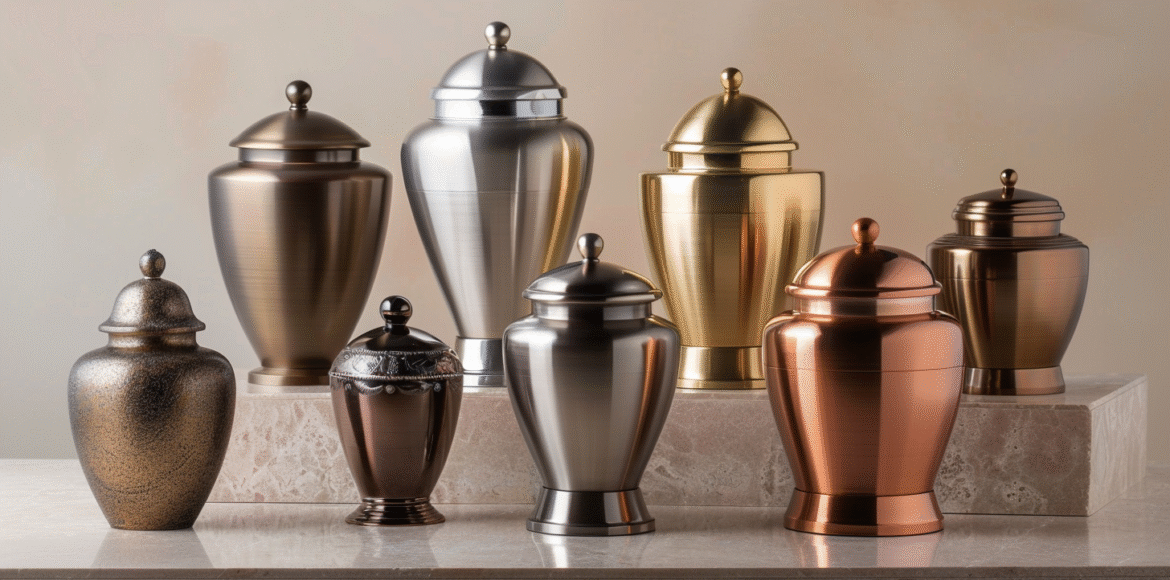
The use of urns, cremation, and the memorialization of ashes in ancient times wasn’t just about honoring the dead—it was a ritual of the soul, a cultural cornerstone, and in some cases, a declaration of legacy and power. In the grandeur of Classical Antiquity, especially in Greece and Rome, the very act of cremating the dead and preserving their remains in intricately designed urns became a blend of art, religion, and politics.
At Dei Gratia Urns, our modern cremation urns echo this ancient beauty. But how did these ancient civilizations influence today’s practices? The answer lies buried deep in the archaeological remnants of stone-carved tombs, funerary inscriptions, and exquisitely painted ceramic urns.
Let’s journey back to a time when the urn was not just a container—but a vessel of memory and meaning.
1. The First Flame: Origins of Cremation in Ancient Greece
The tradition of cremation in ancient Greece can be traced back to as early as 1000 BCE during the Late Bronze Age, transitioning into the Geometric Period (900–700 BCE). Unlike earlier Mycenaean burials, which were primarily inhumations (body burials), cremation became a prominent funerary practice in Athens and other city-states.
According to the Wikipedia page on Ancient Greek burial customs, cremation was often considered more heroic and prestigious, especially for warriors. In Homer’s Iliad, the cremation of Patroclus and Achilles is central to the narrative. Their ashes were collected in golden urns, often placed in monumental funerary mounds.
This marked the symbolic role of urns—not just as containers for ashes, but as eternal homes for the soul.
2. The Artistry of Greek Funerary Urns
The ancient Greek urn was more than functional—it was a canvas of grief. These vessels were often painted with elaborate scenes of mourning, battle, and even afterlife depictions. Among the most iconic were the Attic lekythoi, a form of oil jar typically left at gravesites.
One of the finest examples of this artistry is the Achilles Painter’s white-ground lekythos, which showed mourners standing beside a stele (grave marker). These urns conveyed not just sorrow, but also the status, gender, and age of the deceased.
Such urns helped cement cremation as a sacred act—and made the urn itself a piece of the funeral.
3. Cremation as a Civic Duty in Athens
In classical Athens, cremation of fallen warriors was not just permitted—it was a state ritual. The funeral oration, a eulogy for war dead, became an annual ceremony.
As detailed on Pericles’ Funeral Oration, the ashes of soldiers were placed in ceramic urns, carried in a procession through the city, and interred in a public tomb called the Demosion Sema.
The urns carried meaning beyond mourning. They became symbols of democracy, valor, and the Athenian way of life.
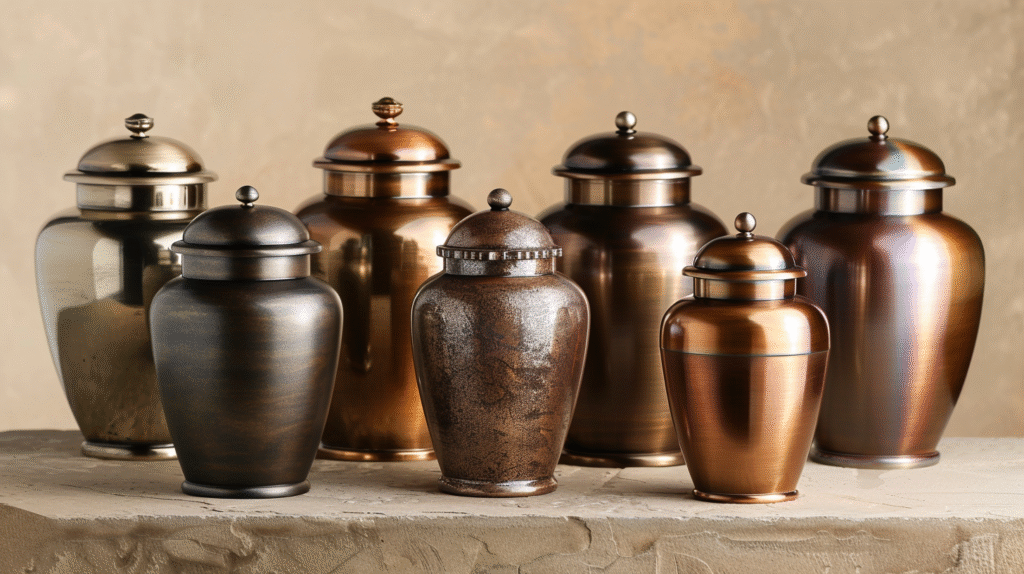
4. The Roman Way: Empire, Elegance, and Ashes
When Rome absorbed the Hellenistic world, it also adopted and evolved the practice of cremation. In early Roman Republic (5th–1st century BCE), cremation was the most common form of body disposal.
The ashes were placed in cinerary urns, usually made of terracotta, glass, marble, or bronze. These urns were stored in columbaria—underground vaults with niches resembling pigeonholes, from which the term derives.
The famous Columbarium of Pomponius Hylas in Rome is one of the most richly decorated examples and reveals how urns became a reflection of both class and religious beliefs.
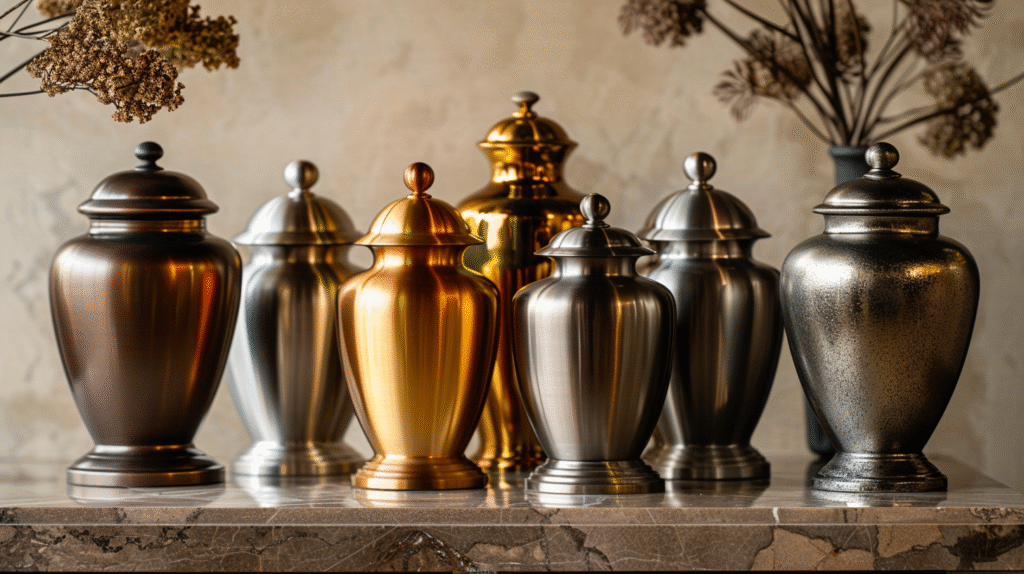
5. Roman Urns and the Afterlife Economy
Unlike the democratic burial ideals of Athens, Roman funerary customs were tied to social hierarchy. Elite families often commissioned luxurious urns with inscriptions in Latin, sometimes topped with sculpted busts or figurines of deities.
The rise of epitaphs also introduced a new language of legacy—urns would not just contain ashes, but proclaim messages like “Sit tibi terra levis” (May the earth be light upon you).
This was not just death. This was branding of remembrance.
The Wikipedia page on Roman funerals notes how elaborate tomb structures like mausolea sometimes held multiple urns from generations of families—symbolizing eternal lineage.
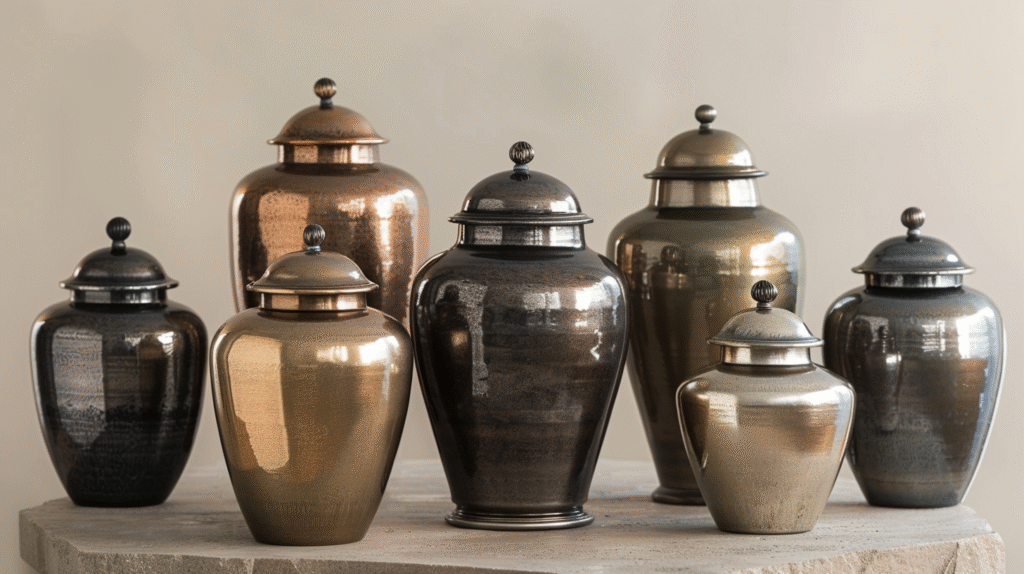
6. The Shift from Fire to Earth: Burial and the Decline of Cremation
By the 3rd century CE, Christianity was on the rise, and with it came new funerary ideologies. Cremation, associated with pagan rituals, began to fade. The Christian doctrine of resurrection emphasized body preservation, and thus, burial returned as the norm.
Still, thousands of urns remained buried, preserved, and in some cases rediscovered in the modern archaeological age.
As the Wikipedia article on Cremation in ancient Rome explains, by 400 CE, cremation had almost completely disappeared from Roman society.
But the cultural memory lived on in urns, art, and poetry.
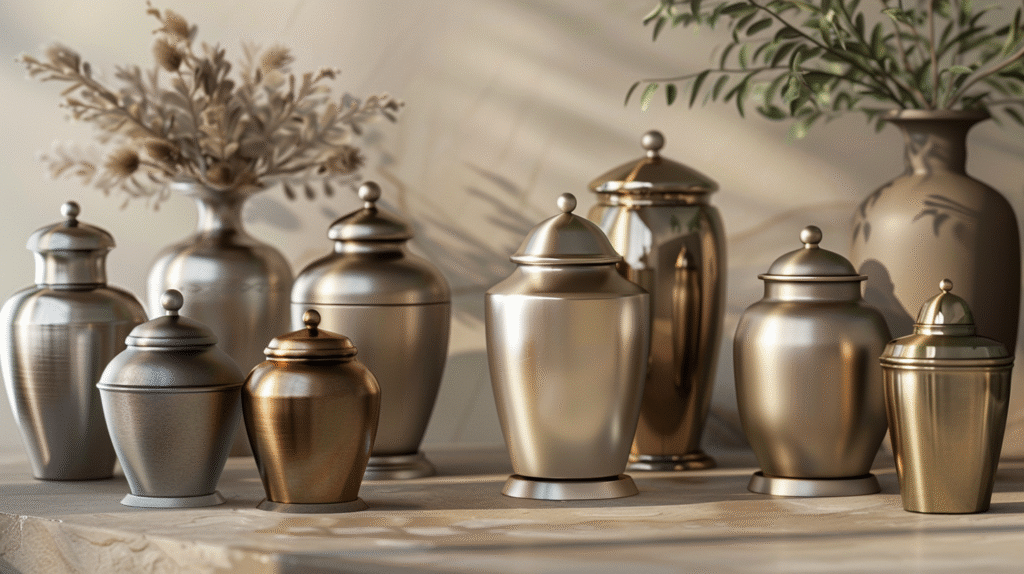
7. Rediscovering Antiquity: The Modern Renaissance of Classical Urns
Fast forward to the Renaissance and the Neoclassical period, when Europe looked back on Greece and Rome as the pinnacle of art and architecture. Suddenly, urns became fashionable once again—not just in burial, but as decorative motifs in gardens, tombs, and homes.
This resurgence was not random.
Antique Roman urns unearthed in Pompeii, Herculaneum, and throughout the Mediterranean provided design inspiration for sculptors and architects. The urn returned not just as a relic—but as a revived cultural symbol.
The Legacy in Modern Times: From Antiquity to Dei Gratia Urns
Today, when you hold an urn from Dei Gratia Urns, you’re not just touching polished metal or carved ceramic. You’re embracing a tradition that spans 3,000 years—one that began with warriors like Achilles, poets like Virgil, and philosophers like Plato.
Cremation is no longer a pagan rite or a political act—it is a deeply personal ritual. But the desire to preserve ashes in something meaningful remains as strong as ever.
Whether it’s an aluminum keepsake urn, a hand-painted ceramic urn, or a custom bronze masterpiece, the soul of every urn echoes with the voice of history.
At Dei Gratia Urns, we honor this tradition with designs that speak to both ancient elegance and modern grace.
What We Learn from Greece and Rome
- Cremation was once a symbol of heroism, not just disposal.
- Urns were designed with care, meaning, and artistry.
- Public rituals gave communal strength to grief.
- Inscriptions and symbolism immortalized identity.
- Modern urns carry forward a legacy of remembrance.
The urn is not a modern invention—it is the oldest human response to eternal questions.
And in remembering the past, we make space for new ways to honor the dead, to hold on to the ashes of a loved one, and to give beauty to the farewell.
Final Thought
Greece and Rome may have passed into history, but their influence lives on every time a family chooses cremation, honors ashes, and selects an urn that reflects love and memory. Their wisdom wasn’t in stone or fire alone—it was in knowing that grief needs shape, and that shape… is the urn.
types of urns
It’s hard to search out knowledgeable folks on this matter, but you sound like you know what you’re talking about! Thanks