
7 Unexpected Truths About Keepsake Urns for Ashes That Change How We Grieve Forever
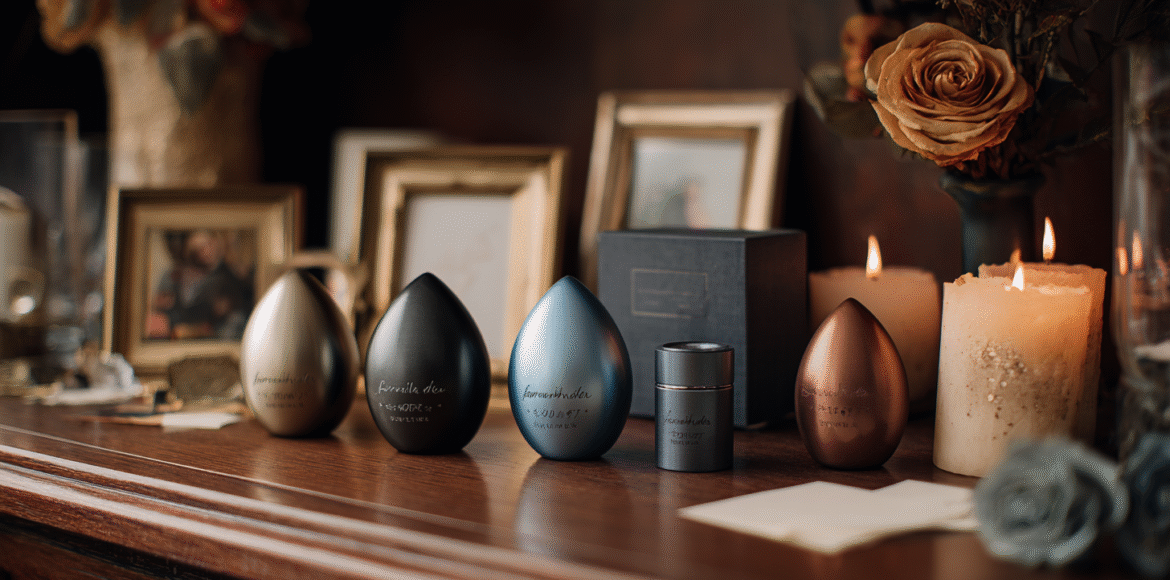
When we think about grief, we often imagine the big moments—the funeral, the eulogy, the burial or scattering. But grief is rarely loud. It shows up in the quiet moments: in the stillness of the bedroom, in the smell of their sweater, in the silence after laughter stops.
Table of Contents
In those moments, what many people find most comforting is something small. Something that holds the essence of the person they’ve lost. That’s where keepsake urns for ashes come in.
But here’s the truth—most people don’t know what they really are until they need one.
This guide will reveal 7 powerful, human-centered truths about keepsake urns that not only explain their purpose, but show how they can change the way we grieve, remember, and heal.
Let’s begin.
1. Keepsake Urns Aren’t Just Smaller—They’re More Intimate
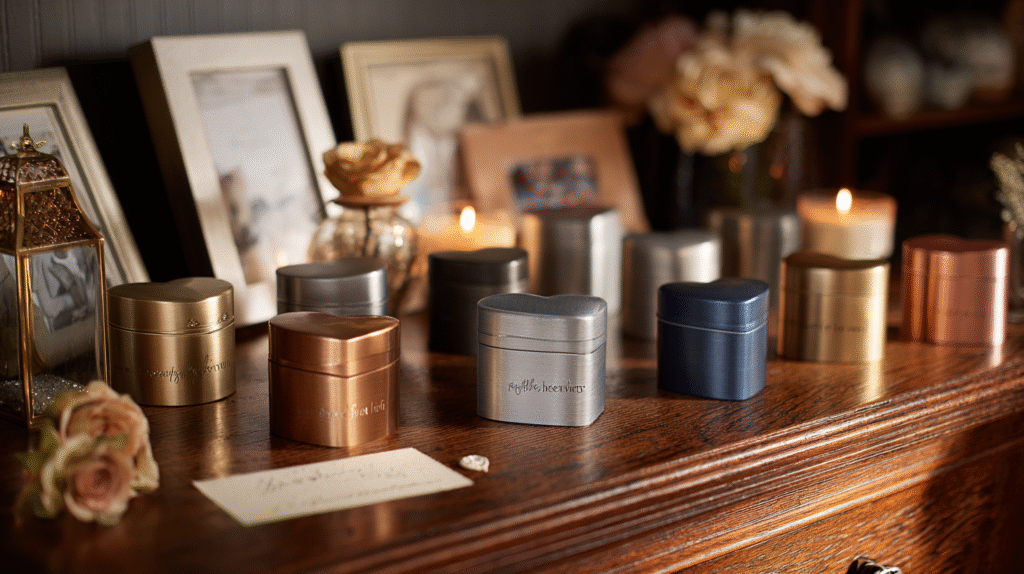
At first glance, a keepsake urn is simply a smaller version of a standard cremation urn. While a traditional urn might hold all of a person’s cremated remains (typically 180–220 cubic inches), a keepsake urn holds a symbolic amount—often just a few tablespoons.
But that physical difference comes with emotional weight.
Because you can:
- Hold it in your hand, literally
- Place it in small private spaces, like a bedside table or memory shelf
- Carry it with you if needed
- Share it without needing to “give up” anything
It turns cremation from a one-time decision into an ongoing experience of love and remembrance.
As grief therapist Alan Wolfelt writes, “People don’t just want to remember; they want to feel close.” Keepsake urns make that closeness possible.
2. Keepsake Urns Allow Grief to Be Shared—Not Divided
One of the most painful decisions after cremation is this:
Who gets the ashes?
It’s a question that has created tension, arguments, and guilt in families for generations.
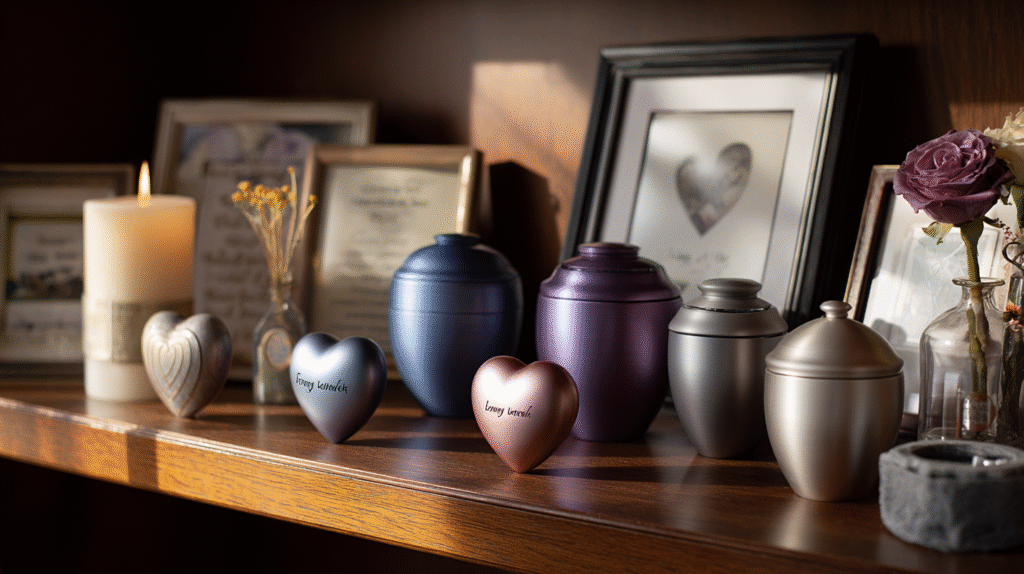
Keepsake urns offer a beautiful solution: everyone can have a piece of them.
Instead of choosing one person to hold the urn, siblings, spouses, grandchildren—even best friends—can each have a mini urn, engraved and chosen with intention.
Examples:
- A mother who lost her son divided his ashes into 3 keepsake urns: one for herself, one for his father, and one for his childhood best friend.
- A grandfather who passed was honored with 4 identical urns given to each grandchild at his celebration of life.
- A widow kept the full urn at home but sent a pendant urn necklace to her husband’s sister, who lived overseas.
This practice reflects the concept of distributed mourning—something ancient cultures have embraced, and that’s gaining popularity again in the post-pandemic world.
3. Keepsake Urns Help Us Grieve in Private, Quiet Ways
Let’s be honest: Not everyone is comfortable grieving in public.
For many, the loud mourning of the funeral home fades quickly—and what remains is a deeply personal sadness that surfaces at odd times.
Maybe:
- You whisper “good night” to a photo
- You sit in their chair sometimes, hoping to feel close
- You wear their watch or keep their voicemail
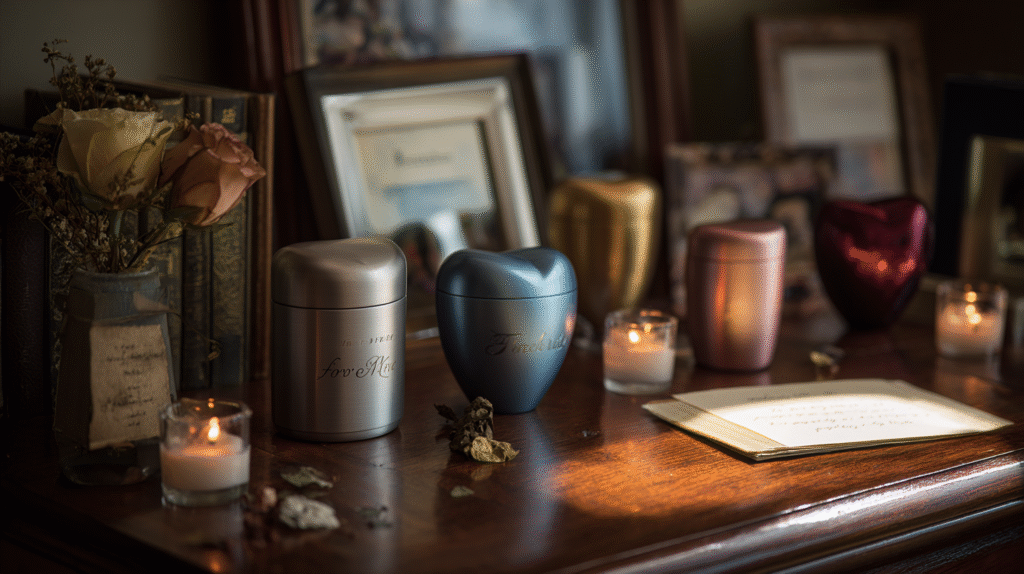
A keepsake urn fits perfectly into that kind of healing. Its presence is:
- Discreet
- Symbolic
- Accessible
- Consistent
You don’t need a religious ritual or permission. You don’t need a graveyard. You just need a place—and a quiet heart. And for thousands of grieving people, that place becomes a corner shelf, a bedside table, a reading nook.
4. Keepsake Urns Are Transforming Cremation Rituals
Cremation has changed dramatically in the last 50 years. According to the Cremation Association of North America (CANA), more than 57% of Americans now choose cremation, compared to just 4% in the 1960s.
With that shift, families are asking:
- How do we create a meaningful ritual without burial?
- How can we make cremation feel personal, not clinical?
- What can we do together as a family?
The answer, more and more often, involves keepsake urns.
They’re now used in:
- Scattering ceremonies, where most ashes are scattered, and some kept
- Water ceremonies, where ashes are floated using biodegradable urns, while a symbolic amount remains in keepsake form
- Group memorials, where multiple people share stories and take home a part of the person
This aligns with the emerging field of “open grief spaces”—environments where grief is expressed with art, ritual, and storytelling rather than silence or shame.
5. There’s a Keepsake Urn for Every Personality and Belief
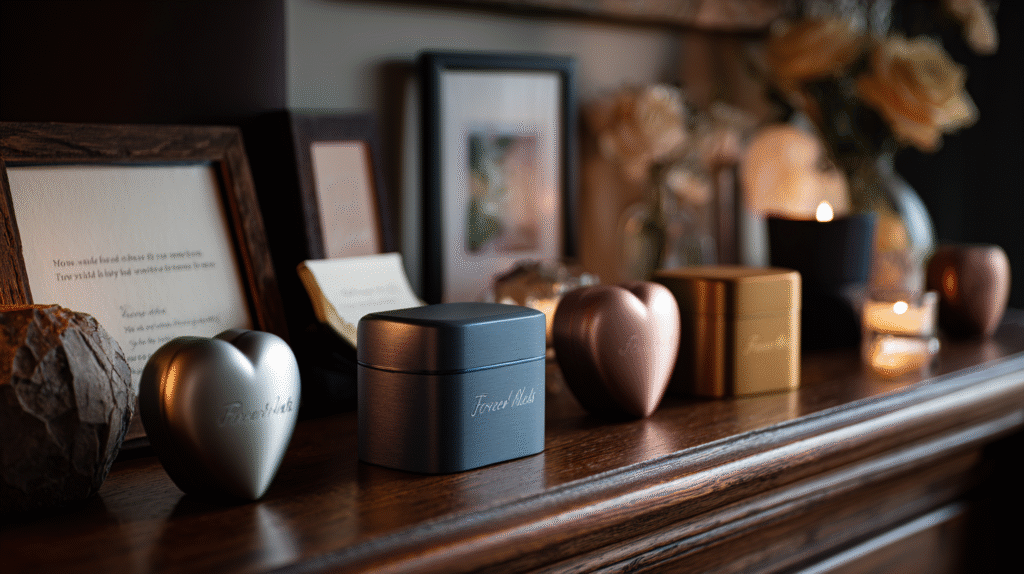
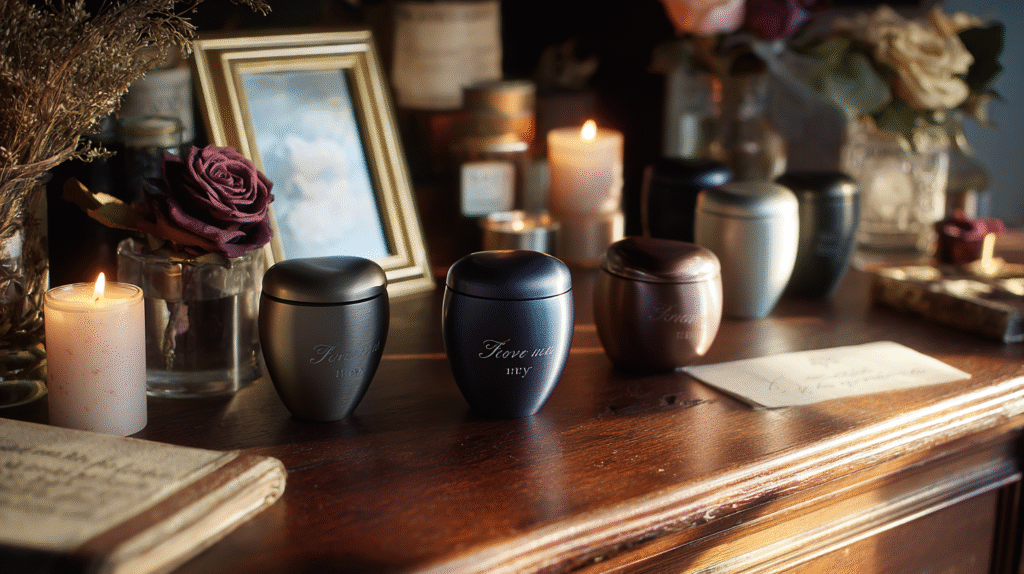
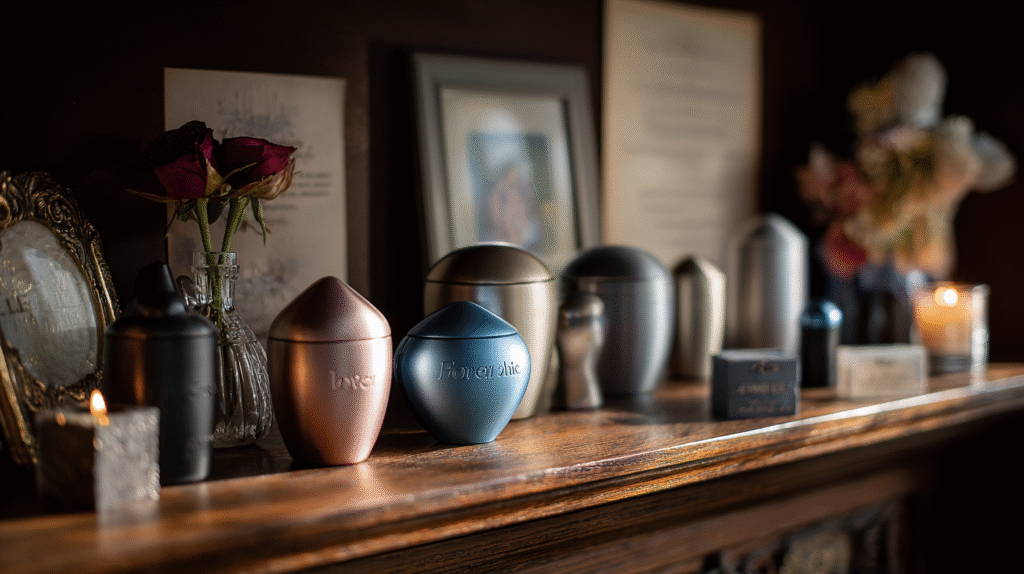
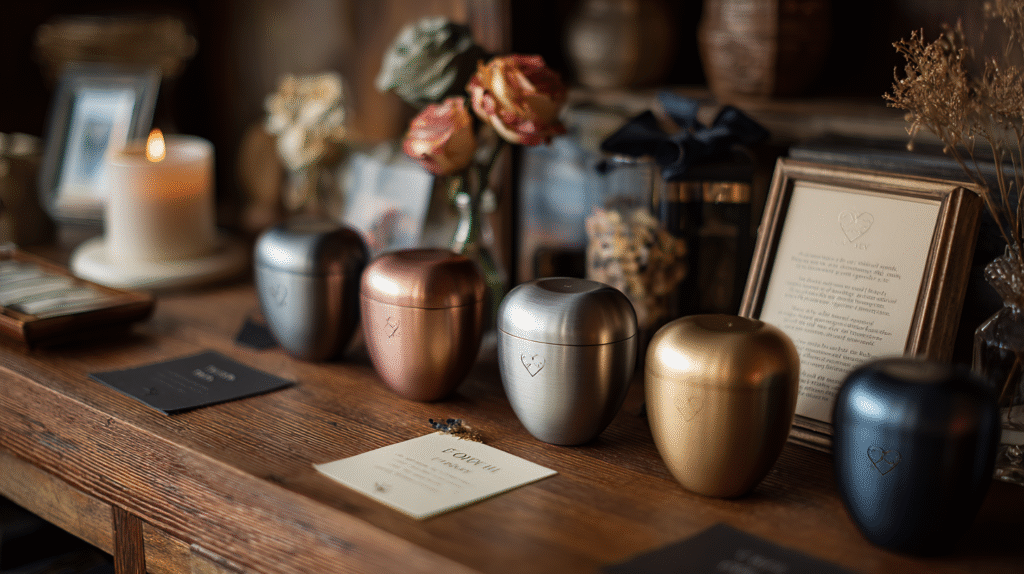
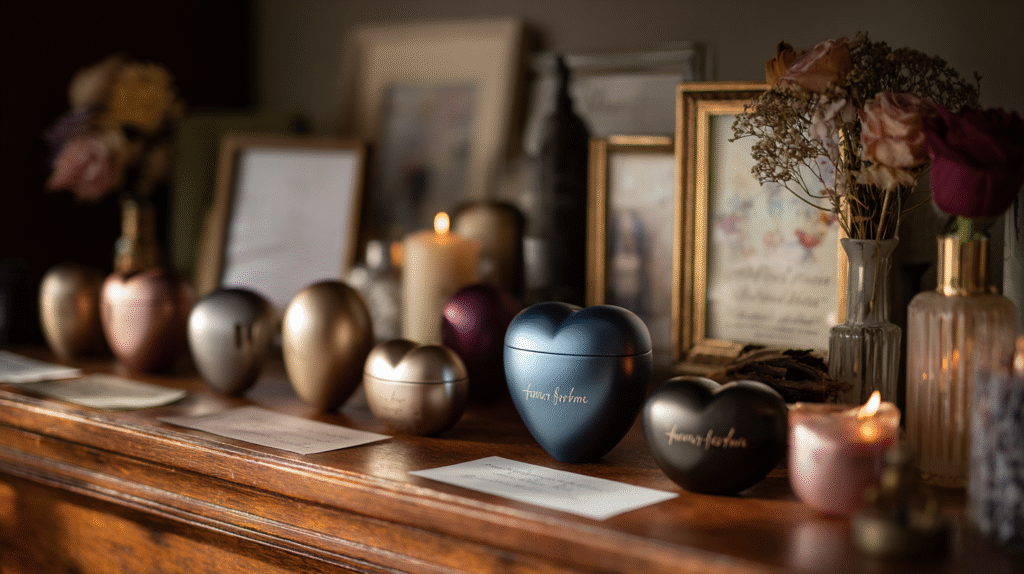
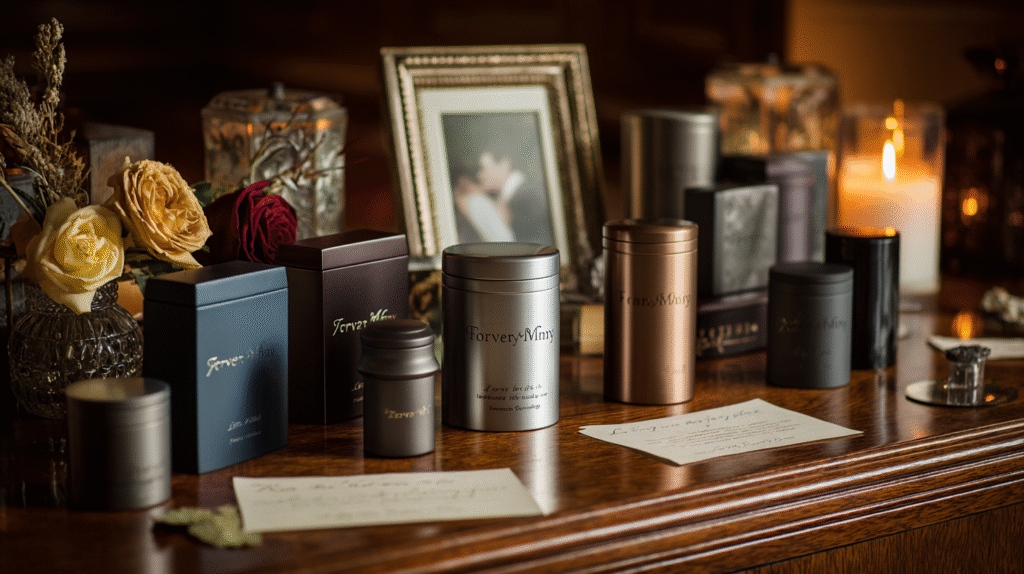
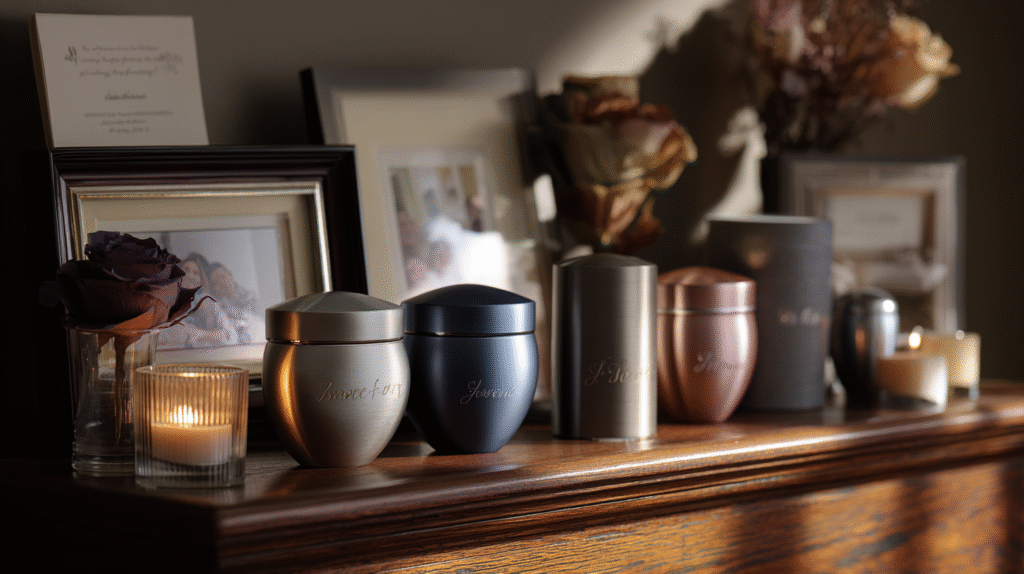
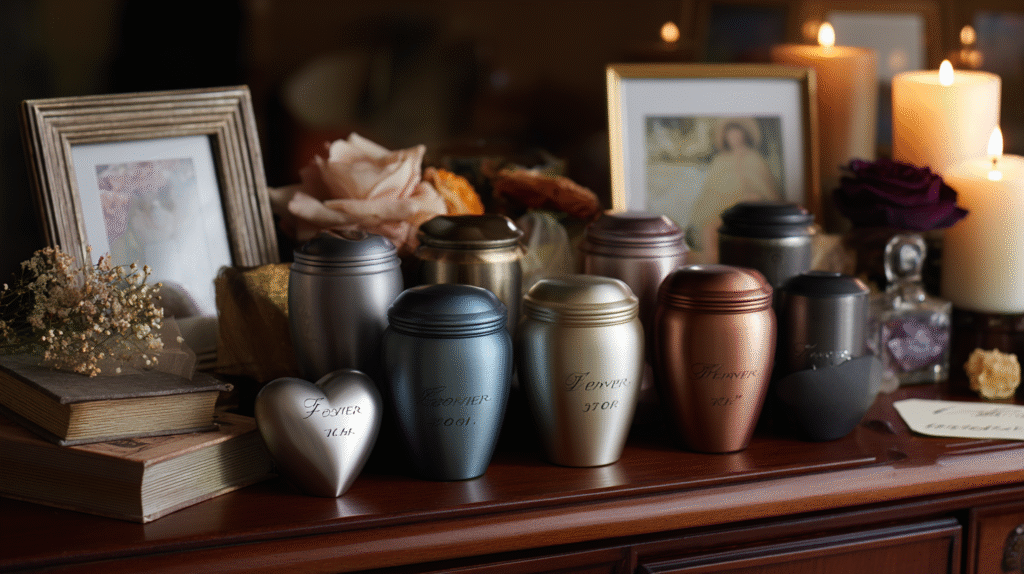
One of the most beautiful things about keepsake urns is their diversity. They’re not limited to somber black or bronze designs. Today, they are crafted to reflect the unique personality, style, and spirit of the person you’ve lost.
Common Materials:
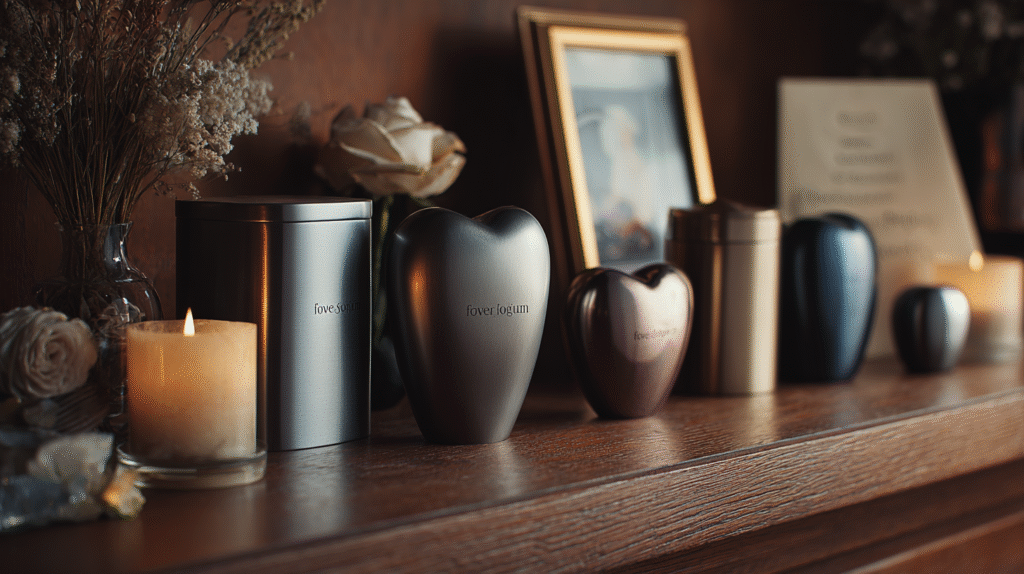
- Brass and stainless steel: Durable, classic
- Wood: Earthy, warm, spiritual
- Ceramic or porcelain: Artistic, delicate
- Glass and crystal: Elegant, modern
- Salt, paper, or sand: Biodegradable and eco-conscious
Unique Shapes:
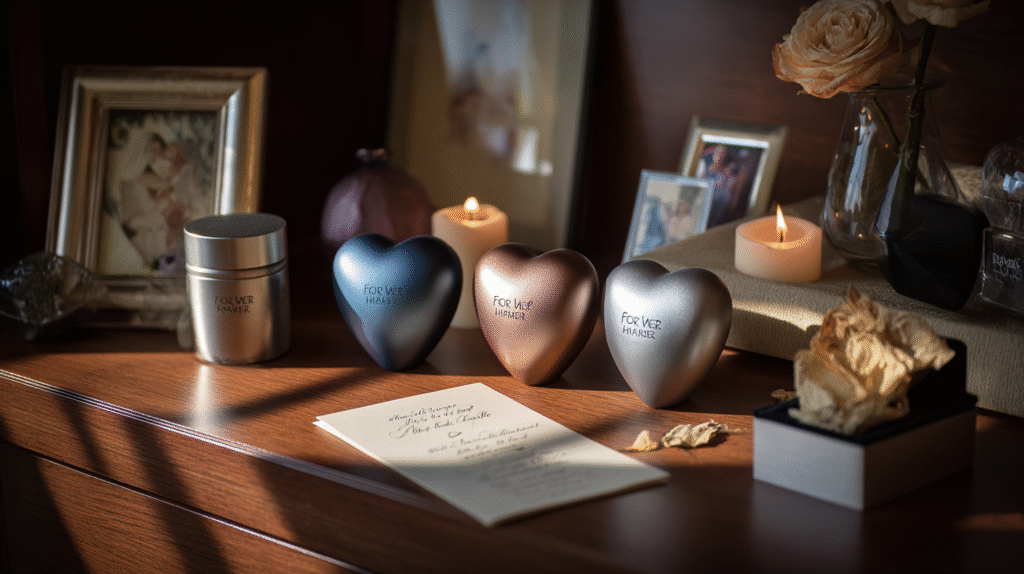
- Hearts for partners or children
- Wings or doves for spiritual remembrance
- Tear drops for grief symbolism
- Motorcycles, guitars, or tools for hobby-based remembrance
- Paw prints for pets
You can even choose photo urns, engraved quotes, or ashes-infused glass jewelry.
Dei Gratia Urns offers a full range of personalized options, allowing you to honor your loved one in a way that feels authentic—not generic.
6. Keepsake Urns Are for More Than People—They’re for Pets, Too
For millions of families, pets are family. And when we lose them, the grief is just as real. That’s why pet keepsake urns have become an essential part of the memorial market.
Just as we keep collars, toys, or photos, many now keep a small urn of ashes for:
- Dogs
- Cats
- Birds
- Horses
- Even exotic pets like reptiles or rabbits
Options include:
- Paw print designs
- Photo cubes with built-in urns
- Bone-shaped containers
- Mini urns with etched names
According to the American Veterinary Medical Association (AVMA), over 60% of Americans now consider their pets “as important as children.” Our grief reflects that. So do our keepsake rituals.
7. Keepsake Urns Are Helping Us Talk About Death More Openly
Let’s be honest: Western culture avoids death. We whisper it. We push it away. We sanitize it.
But in the wake of COVID-19, more people are talking about:
- Advance planning
- Estate organization
- Living wills
- Cremation wishes
And as we begin to embrace death literacy, we’re also embracing new ways to remember.
Keepsake urns give people something to talk about. Something to hold. Something to share.
They become a way to tell stories:
“This was Dad’s. He kept one in his library and one in his travel bag.”
“We each got one at Mom’s memorial. Mine says ‘Keep growing,’ her favorite saying.”
“This tiny urn sits on my altar. It holds my baby’s memory and helps me keep going.”
As philosopher Alain de Botton writes, “Memory is not just the residue of thinking. It is a form of thinking in itself.” Keepsake urns give memory form.
Bonus: 5 Thoughtful Ways to Use Keepsake Urns
If you’re wondering how people incorporate keepsake urns into their lives, here are 5 beautiful ways:
- Memory Corners: Place the urn beside photos, a candle, and letters in a dedicated space.
- Travel Altars: Bring the urn with you on meaningful journeys—like weddings, graduations, or moves.
- Anniversary Rituals: Light a candle beside the urn on birthdays or anniversaries.
- Grief Therapy Tools: Hold or touch the urn during sessions as a grounding object.
- Family Heirlooms: Pass down the urn to children with written stories or DNA profiles.
Why Choose Dei Gratia Urns?
Because when someone you love dies, you want more than a product. You want compassion. You want care. You want to feel understood.
At Dei Gratia Urns, we offer:
- Handcrafted keepsake urns made with love
- Matching urn sets for families
- Custom engraving and symbolic designs
- Fast, discreet, respectful shipping
- Eco-friendly and TSA-compliant options
Every urn is crafted as a tribute. Every customer is treated like family.
Final Words: What We Hold Onto—Holds Us, Too
You can’t bring them back.
You can’t hear their voice again.
But you can hold something that still feels like them.
That’s the quiet gift of a keepsake urn for ashes.
It’s not just about cremation.
It’s not about death.
It’s about carrying forward the love, the memories, the presence—through every chapter that comes next.
So when you hold that tiny urn in your palm, know this:
You’re holding a story.
You’re holding a promise.
And in many ways…
You’re being held, too.
Evolving Grief: Keepsake Urns in a Changing Cultural Landscape
Societies across time and continents have always developed ways to cope with death. From the ancient Egyptians who buried their loved ones with goods for the afterlife to the Victorians] who kept locks of hair in mourning jewelry, humans have long searched for ways to carry forward connection beyond the grave.
Today, as cultural norms shift, keepsake urns are becoming a modern evolution of that same longing. But what’s different now is how personal grief has become.
Instead of one-size-fits-all traditions, we’re embracing:
- Personal rituals instead of formal ceremonies
- Home memorials instead of cemetery-only visits
- Creative expressions like urn tattoos, memorial art, or ashes in ink
- Digital legacies through memory apps or QR-code-linked urns
This shift toward intimate remembrance is precisely where keepsake urns for ashes serve such a powerful purpose—they let us mourn, remember, and honor on our terms.
In fact, Modern Loss, a platform created to help people navigate grief in contemporary ways, has cited the growing role of objects like urns in helping us form new mourning language.
Grieving Together, Apart: Keepsake Urns in Modern Family Structures
In today’s world, families are more complex than ever. Blended families, long-distance relatives, chosen families, and even estranged relationships are part of the modern grief equation.
This makes the traditional model of “one urn for one family” feel… incomplete.
Keepsake urns offer a solution that’s both inclusive and healing:
- Stepparents and stepsiblings can each receive a portion of ashes in a symbol that reflects their bond.
- Estranged children can reconnect through a keepsake, even if they weren’t involved in the funeral.
- Friends who were closer than family can be honored in tangible ways.
Rather than assigning ownership over memory, keepsake urns create shared space for grief—across personalities, distances, and histories.
One customer shared:
“I hadn’t spoken to my brother in five years before Dad passed. But when we met again at the funeral, Mom gave us each a keepsake urn. That was our starting point. It reminded us what we both lost—and why we had to heal.”
In this way, urns don’t just preserve ashes—they help mend what was broken.
Building Generational Memory: Keepsake Urns as Family Storykeepers
Long after the pain softens, the stories remain.
Keepsake urns can serve as anchors in family storytelling, especially when paired with physical or digital content.
Ideas to Extend Legacy Using Keepsake Urns:
- Store a letter inside the urn or its packaging, addressed to future generations.
- Pair the urn with a family tree print or chart.
- Include a USB drive or QR code linking to videos, recipes, or audio recordings of their voice.
- Add a note inviting the next generation to pass it forward, carrying the story ahead.
Think of it as a time capsule, not just a keepsake.
When your great-grandchild asks, “Who was she?”—this little urn, and the memories it holds, will answer.
As historian David McCullough once said, “History is who we are and why we are the way we are.” Keepsake urns help us build that history.
Spiritual Resilience: Keepsake Urns as Tools for Faith and Hope
While keepsake urns are not inherently religious, they blend beautifully into spiritual grief rituals across many belief systems.
Whether it’s prayer, meditation, or mindfulness, a keepsake urn provides a focal point for connection with what is unseen but deeply felt.
Spiritual Uses of Keepsake Urns:
- In Christianity, keepsake urns are often placed beside candles or crosses on remembrance tables.
- In Buddhism, they may be part of an ancestral shrine for meditation.
- In Hinduism, a small portion of ashes might be kept temporarily in the home before immersion.
- In New Age practices, urns may be used in chakra work or grief energy healing.
Regardless of your spiritual beliefs, the urn becomes a symbol of continuity—of presence that extends beyond death.
Creating Keepsake Moments: How to Make the Most of Your Urn
Once you have your keepsake urn, you might wonder: What now?
Here are 7 gentle ideas to help you deepen the experience:
- Letter Ritual: Write a letter to the person, fold it, and keep it near or under the urn. Update it yearly.
- Memory Stones: Place polished stones beside the urn, each one symbolizing a core memory or trait.
- Music Ritual: Play their favorite song once a week and simply sit with the urn in silence.
- Seasonal Altars: Update the space around the urn to match the seasons—flowers in spring, candles in winter.
- Birthday Tributes: On their birthday, add a new keepsake to the space: a new frame, object, or note.
- Guestbook of Grief: Let visitors write messages or memories when they visit.
- Meditation Space: Use the urn as a focal point for guided grief meditations or prayer.
These moments don’t require religion or rules. Just intentional presence.
Why Keepsake Urns Are Not About Death—They’re About Love That Doesn’t End
One of the greatest misconceptions about keepsake urns is that they’re “morbid.”
But talk to anyone who owns one, and you’ll hear the same word over and over again: comfort.
A woman who lost her father keeps her urn in her studio, saying:
“He never missed a single recital. This way, he still hasn’t.”
A man who lost his partner says:
“It’s a simple brass urn, nothing fancy. But it’s where I go to say goodnight.”
A parent who lost a child said:
“People say you have to move on. But I don’t want to. This urn lets me carry her forward instead.”
In a world that tries to rush grief, keepsake urns allow you to slow down. To breathe. To hold on, even as you learn to move forward.
Why Thousands Trust Dei Gratia Urns for Keepsake Urns
At Dei Gratia Urns, we know what this means. We aren’t just a company—we’re a family that has walked through grief. That’s why we’ve crafted each urn with care, quality, and heart.
What you’ll find with us:
- Wide selection of handmade keepsake urns
- Eco-friendly and TSA-compliant materials
- Custom engraving and photo urn options
- Matching urn sets for families or friends
- Urns designed for pets, partners, children, and all kinds of love
More than anything, you’ll find respect. Because we know you’re not just shopping. You’re remembering. And we’re here for every step of that journey.
Final Reflection: You Don’t Heal by Forgetting—You Heal by Holding On
There is no right way to grieve.
But there are loving ways. Quiet ways. Ways that fit into your life—not just in the moment, but forever.
That’s what keepsake urns for ashes offer.
They don’t erase pain.
They don’t replace presence.
But they give you something real.
Something you can touch when the memories get heavy.
Something you can see when the world moves too fast.
Something you can hold… when you need to feel held.
In the end, a keepsake urn is not about death.
It’s about the life you still carry with you.
Every day. Every breath. Every heartbeat.
And in that way, love never ends.