
1st From Sky Burials to Ash Paintings: The Untold Stories Behind Funeral Urns Around the World

When we think of a funeral, we often picture black suits, mourning rituals, and solemn goodbyes. But across the globe, death is observed through a kaleidoscope of traditions—many of which use the humble urn as more than just a container. It becomes a vessel of legacy, a cultural symbol, and in many cases, a spiritual conduit.
Table of Contents
Let’s journey through some of the most compelling funeral traditions and explore the deeper meaning behind urns across cultures.
1. Tibet’s Sky Burials: “Let the soul ascend”
In the high-altitude regions of Tibet and parts of Mongolia, the concept of burial or cremation is foreign. Instead, a sky burial is performed. Here, the deceased body is ritually dissected and offered to vultures on mountaintops.
There are typically no urns—at least not in the Western sense. However, the idea behind this ritual is spiritually profound: the body is simply a vessel. What matters is the release of the soul. The absence of an urn is itself symbolic, pointing to the belief that nothing material should bind the spirit after death.
2. Japan: The Art of Minimalism in Ashes
In Japan, cremation is nearly universal—99.97% of Japanese opt for it. But the ceremony doesn’t end with cremation. Families use ceremonial chopsticks to transfer bone fragments into the kotsu-oke (urn), piece by piece.
Japanese urns are often minimal in design—reflecting the nation’s Zen principles. Some are stored in family tombs, while others may remain in ancestral homes, with Buddhist altars erected to honor the departed.
3. Hinduism: Ashes to the Ganges
In India, cremation is a sacred ritual believed to release the soul (Atman) from the cycle of rebirth (Samsara). Traditionally, the ashes are collected in a kalash (urn) and immersed in the Ganges River—a sacred act believed to purify the soul.
The urn, often made of clay, is biodegradable and symbolic of the return to nature. It carries not just the remains, but centuries of ritual purity and familial duty.
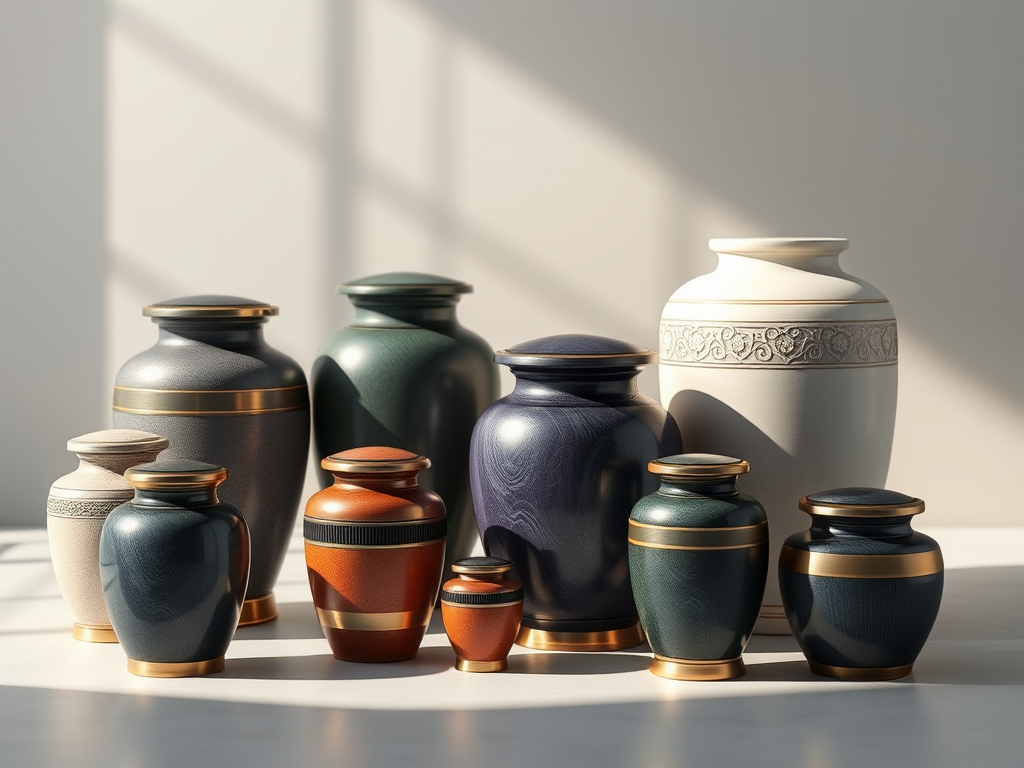
4. The United States: From Mantelpiece to Memorial Forests
In America, cremation is on the rise—with over 50% of the population choosing it today. But the way people handle the ashes has transformed radically.
While traditional ceramic or metal urns remain common, many opt for personalized urns—shaped like guitars, footballs, or favorite animals. Others scatter the ashes in national parks, turn them into tattoos, or even into fireworks.
A growing trend? Memorial forests, where ashes are buried with a tree sapling in biodegradable urns—allowing the loved one to “become” the tree itself.
5. Mexico’s Día de los Muertos: “They never really leave”
During Día de los Muertos (Day of the Dead), Mexican families create ofrendas (altars) filled with marigolds, food, photos—and sometimes urns—welcoming the spirits of the deceased.
Urns here are part of a celebration, not sorrow. They remind families that the dead live on, not in silence, but through stories, food, and song. It’s a spiritual reunion—and the urn is a sacred guest.
6. Ghana’s Fantasy Coffins: The Urn as a Canvas
While urns are less common in Ghana, funerals are extravagant, often involving custom-built coffins shaped like cars, animals, or airplanes. In cases where cremation is used—especially among the diaspora—the urn itself becomes a work of art, designed by the same craftsmen who build fantasy coffins.
For the Ga people of Ghana, these vessels represent the passion or status of the deceased, creating a powerful emotional link for the family.
7. Australia’s Aboriginal Traditions: Spirits of the Land
Among Aboriginal Australians, death rituals are diverse and deeply tied to the land. In some groups, cremation ashes are painted with ochre and kept in hollow log urns, which are decorated in tribal patterns and used in ceremonial dances before being placed in sacred earth.
Each urn here is a cultural artifact, speaking the language of ancestral spirits and dreamtime stories—a fusion of life, land, and the afterlife.
8. Ash Scattering at Sea: The Ocean as a Final Embrace
Scattering ashes in the sea is practiced by people of many cultures—Vikings, British Royal Navy, and modern maritime families alike.
The urns used for such rituals are often water-soluble, crafted from salt, paper, or sand. These break apart as they hit the waves, symbolizing dissolution of the physical and merging with the eternal.
A Vessel of Memories
No matter where we come from, death is something that unites us all. Yet how we honor our loved ones reflects everything about who we are—our history, our beliefs, and our identity. The urn, then, isn’t just a container. It’s a companion in mourning, a keeper of legacy, and a symbol of transformation.
As cultures continue to evolve, so too will our death rituals. But one thing is certain: the vessel that holds the ashes often holds the soul of a story too.