
- Your cart is empty Browse Shop
What Is an Urn, The Emotional Healing & Spiritual Symbolism of Cremation Urns in Modern Memorials
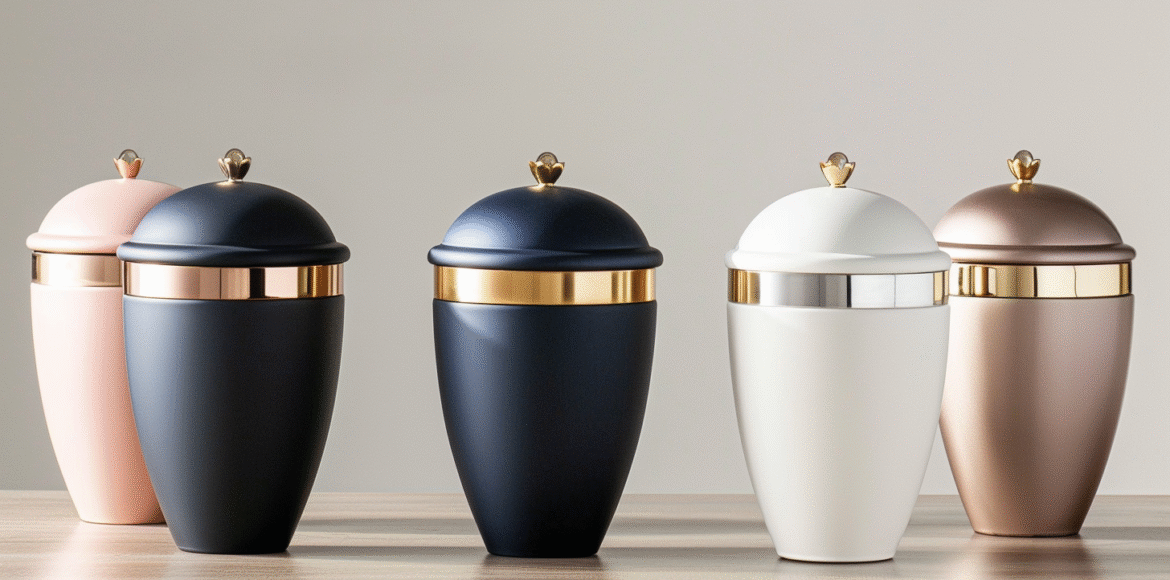
What Is an Urn? More Than “Just a Container” for Ashes
In the most basic sense, an urn is a vase-like container designed to hold the cremated ashes of a departed loved one. Traditionally, urns have been used for centuries across cultures as the vessels for remains after Cremation. However, in modern times an urn has come to symbolize far more than its physical form. It represents a tangible connection to the person who has passed away, serving as a focal point for remembrance, comfort, and even spiritual reflection.
In a world where cremation is increasingly common (now chosen in over 60% of final arrangements in the U.S.), the role of the urn in a Funeral or home memorial has expanded significantly. It’s not “just a container” – it’s a profound symbol of cherished memories and undying love that plays a crucial role in emotional healing and memorial traditions.
Modern cremation urns come in all shapes, sizes, and materials – from classic brass or ceramic urns to biodegradable eco-friendly urns, to personalized art pieces. Yet beyond aesthetics, what truly defines an urn today is the meaning we attach to it. Whether displayed on a mantle at home, placed in a columbarium, or used during a scattering ceremony, an urn often becomes a physical embodiment of a loved one’s memory.
Every glance at the urn can evoke the presence of the one who has passed, ensuring they remain close in spirit even when physically gone. This article delves into the emotional, spiritual, and cultural significance of urns – exploring how these sacred vessels aid in grief recovery, symbolize deeper meanings in various faiths, and contribute to healing rituals in our modern memorial culture.
The Urn as a Source of Comfort and Healing in Grief
Grief is a complex journey, and people seek comfort in different ways. For many, a cremation urn provides a psychological anchor during the storm of loss. Keeping a loved one’s ashes nearby – whether in a prominent urn at home or divided into small keepsake urns or jewelry – can offer a sense of continuity and closeness that helps in healing.
Having the urn present serves as a constant reminder of the bond shared and can reassure the bereaved that their loved one’s memory and spirit are still with them. This feeling of an ongoing presence can be deeply comforting when navigating daily life after a loss.
Importantly, an urn can transform into something more than an object; it becomes “a tangible source of understanding, acceptance, and healing” in the grief process. Psychologists note that maintaining a “continuing bond” with the deceased – for example, by talking to the urn or including it in rituals – is a natural and healthy way to cope with loss for many people. Rather than the outdated notion of “letting go completely,” modern grief experts recognize that holding on to memories and symbols of loved ones (like an urn) can support healing.
The very act of choosing and personalizing an urn can also be therapeutic. Family members often take great care in selecting an urn that reflects the personality and spirit of the departed, turning a painful task into an opportunity to honor their life. This process can lend a sense of purpose amid sorrow – as one focuses on how best to commemorate the loved one, it reinforces the continuing bond and can alleviate some of the grief by channeling it into a meaningful tribute.
Real-world reflections: Many families have shared that keeping their spouse’s or parent’s urn at home brings comfort. They might light a candle beside the urn each evening or talk to it during moments of loneliness. These personal rituals turn the urn into a “comforting reminder” and part of the household, almost like the loved one still has a gentle presence there. For example, a widow might place her husband’s urn on the mantel with his photo, creating a small memorial corner where she can sit and feel connected to him each day.
Parents who lose a child sometimes choose specially designed urns (like teddy bear urns or bright-colored urns) that honor the child’s memory; they may even cuddle or hold the urn in moments of intense grief, finding solace in its tangible weight and closeness. While everyone’s grief process is unique, countless testimonials affirm that having an urn nearby can provide stability in an uncertain time, acting as an emotional lifeline during the darkest days of mourning.
It’s worth noting that not everyone feels comfort with an urn in the home – and that’s okay. Grief is highly personal. Some may initially find it painful or strange to have ashes present; others might worry it could hold them back from “moving on.” But there is no right or wrong approach.
What matters is that the choice resonates with the grieving individual or family. For many, the urn’s presence is ultimately a source of peace and reassurance: “Keeping them here gives me a sense of peace and helps me feel close. It’s my way of honoring their memory in my own space.” as one person explained.
This ongoing connection can coexist with healing – over time, the intense pain may soften, but the love remains, quietly symbolized by the urn that holds what is left of their physical being. In this way, urns help bridge the past and present, allowing love and memory to live on as grief evolves.
Why Urns Matter in Memorial Traditions and Mourning Rituals
A funeral urn with ashes, adorned by flowers at a memorial service. Such an urn becomes a poignant focal point during funerals or remembrance ceremonies, providing family and friends a tangible way to honor and remember their loved one.
Funeral and mourning rituals are a crucial part of the healing process. They give structure and meaning to an otherwise chaotic time, and an urn often plays a central role in these rituals when cremation is chosen. In a memorial service or celebration of life, the funeral urn holding the ashes may be placed in a position of honor – sometimes surrounded by flowers, photos, candles, or personal mementos.
This setup serves as a focal point for gathering and remembrance, much like a casket would in a traditional funeral. Family and friends can direct their attention, prayers, and love toward the urn, which symbolically stands in for the physical presence of the one who has passed. Coming together around the urn, sharing stories and memories, often creates a “bond of shared loss and love” among mourners. In this way, the urn becomes a vessel not only for ashes but for collective grief and support – a silent witness to the love in the room.
Many mourning rituals have developed around urns and ashes that help families find closure or comfort. For instance, some families hold a scattering ceremony: after a period of keeping the ashes in an urn, they gather at a meaningful location – perhaps a serene garden, a mountaintop, or the ocean’s shore – to scatter the ashes together.
The urn may be carried ceremonially to the site before the ashes are released to the wind or water. The act of scattering can symbolize release and the natural return of the person to the world, which many find cathartic. Even during such ceremonies, the urn is important: it allows the family to transport and handle the ashes reverently, often decorated or engraved for the occasion.
In other cases, families choose to divide the ashes among several small urns or keepsake vessels so that each family member can have a part of their loved one close. This practice can be especially helpful in family healing when relatives live far apart – each can create their own rituals or memorial space with their portion of ashes.
Within the home, people often integrate the urn into daily or seasonal memorial practices. It could be as simple as lighting a candle next to the urn on special dates (birthdays, anniversaries, holidays) or saying a prayer by the urn each morning. Some might place fresh flowers beside it, maintaining a mini-altar of remembrance. These small acts are rituals that provide a sense of continuity and connection, offering comfort on days when the absence feels heavy.
During holidays or family events, the urn might be gently incorporated – for example, a chair might be left open for the loved one with the urn on the table, symbolizing that they are still part of the celebration in spirit. Far from being morbid, such gestures can bring a feeling of warmth and inclusion, reminding everyone that love endures beyond death.
Memorial traditions can also be culturally specific. Different cultures have unique rituals involving urns and ashes:
- In Japan, after cremation, families perform a ritual called kotsuage where they pick up the bones from the ashes with chopsticks and place them into the urn, starting from the feet bones to the skull, as if reassembling the person upright. The family often keeps the urn at home for a period (up to 49 days, a Buddhist mourning period) before interring it in a family grave or columbarium. During that mourning period, the urn may be present on a household altar and honored with incense and prayers.
- In Western funerals, it’s becoming common to have a “memory table” at services, where the urn is surrounded by photos and personal items representing the loved one’s life. Mourners might be invited to come up, pay respects to the urn, perhaps even touch it or say a quiet word to the deceased in their hearts. This interactive element can be very healing, as it allows people to actively acknowledge the loss and say goodbye in their own way.
- Some families create new rituals that suit them personally. For example, one family shared that every year on their father’s death anniversary, they gather at home, bring out his urn to the dining table, and each family member tells a favorite story about him. They then toast in his honor, making it a bittersweet but ultimately joyful remembrance event. The urn’s presence during this ritual is deeply significant – it’s as though a part of him is literally at the table with them.
All these traditions underscore that urns matter because they offer a physical focus for honoring a life. By anchoring rituals around the urn, families find structure in their grief. They have something to hold, to carry, to place in a special spot – actions that can make the abstract idea of loss more concrete and thus a bit more manageable.
As a funeral professionals’ article notes, “tangible reminders serve as a source of comfort and solace, providing a connection to the departed that transcends physical absence”. Memorial rituals with urns, whether solemn or celebratory, help transform grief into acts of love and remembrance, guiding the bereaved toward closure and healing.
Religious Perspectives on Cremation and Urns
Beliefs about cremation and the use of urns can vary widely among different religions and spiritual traditions. For many people, understanding their faith’s perspective can shape how they feel about keeping ashes in an urn, scattering them, or interring them. Here, we explore how several major religions view cremation and urns, highlighting the spiritual or symbolic meanings they attach (or don’t attach) to this practice.
- Christianity: Christianity’s stance on cremation has evolved over time. Most Christian denominations today permit cremation, though practices can differ. The Catholic Church, for example, once forbade cremation but now allows it (since 1963). However, the Church emphasizes that ashes should be treated with the same respect as a body. In 2016 the Vatican issued guidelines stating that remains should not be scattered or kept at home, but rather laid to rest in a sacred place like a cemetery or columbarium.
- This is because Catholics believe in the resurrection of the body, and they emphasize the importance of keeping remains together in a consecrated location. Despite this guideline, many Catholic families do keep urns at home for a time, finding personal comfort in it – though officially the Church prefers a permanent burial of the urn. Protestant Christians are generally more flexible. Protestant churches have no universal rule; they often leave it to individual choice. In fact, unlike Catholics, most Protestants do allow ashes to be kept in an urn at home or scattered in a meaningful place. The focus is on the faith that God can resurrect the deceased regardless of the form of remains.
- Anglican/Episcopalian traditions accept cremation fully, and often perform burial of ashes or have memorial gardens for them. One notable exception in the Christian sphere is the Eastern Orthodox Church, which still strongly opposes cremation. For Orthodox Christians (e.g. Greek Orthodox), cremation is viewed as desecration of the body, and the Church typically will not officiate funerals for those who were cremated. As a result, urns are not part of Orthodox practice; burial is the only acceptable form of laying the body to rest in that faith.
- Judaism: Traditional Jewish law forbids cremation, considering it incompatible with the belief that the body should return to the earth naturally. The Jewish faith generally insists on burial of the body intact, and cremation was historically looked upon as a desecration. Therefore, in strict Jewish practice, urns and ashes have no place – a Jewish cemetery may even refuse to inter cremated remains. That said, in modern times some Jews, especially in more liberal communities, do choose cremation for various reasons (cost, simplicity, personal belief). These families might keep an urn or bury the ashes, although they may not receive traditional funeral rites. There is a growing number of Jews opting for cremation, but often with the understanding that the ashes will be buried in a Jewish cemetery if possible, as a form of compromise with tradition. Overall, while Judaism’s mainstream stance is “no cremation,” the reality is nuanced; those who do cremate are often advised to handle the ashes with dignity, sometimes burying the urn as soon as feasible to align with the faith’s emphasis on returning to dust.
- Islam: In Islam, cremation is strictly forbidden. Muslims believe the body should be honored and returned to the earth intact; Islamic law mandates burial, usually within 24 hours of death, after specific washing and shrouding rituals. As such, the concept of an urn for ashes does not exist in Islamic practice – there are no Islamic urns or ash-keeping traditions. A Muslim family would never keep remains at home or scatter ashes; doing so would be seen as violating religious law. The body is considered to belong to God, and cremation is viewed as an interference with God’s will for the body’s natural decomposition. In Muslim-majority cultures, this taboo is so strong that even attending a cremation of someone (non-Muslim) is traditionally discouraged. The stark contrast of Islamic views reminds us that urns are culturally and religiously specific objects: deeply meaningful in some traditions, but absent or even unacceptable in others.
- Hinduism: In Hindu belief, cremation is not only allowed but generally preferred. Hindus view cremation as a sacred duty that helps release the soul from the physical body and the cycle of reincarnation. The act of cremation is seen as a purification by fire – a gateway to the afterlife. After cremation, the ashes (and remaining bone fragments) are collected in an urn, but usually not kept for long. Hindu tradition calls for the ashes to be immersed in a holy river or other body of water, in a ritual called Asthi Visarjan. The most famous is immersion in the Ganges River, considered very sacred. Families will often travel to rivers like the Ganga at Haridwar or Varanasi to perform this ceremony, believing it helps the soul attain peace and liberation. Thus, the urn in Hinduism is typically a temporary custodian of ashes until the final dispersal. It carries great spiritual weight during that interim: family members treat it with reverence, sometimes placing garlands on the urn or keeping it near pictures of deities until they can perform the immersion ritual. Hindus who live outside of India may ship ashes back to India for immersion, or immerse them in local rivers or the sea with prayers if a trip isn’t possible. A small portion of ashes might occasionally be kept in a miniature urn as a keepsake by some, but traditionally the ideal is to return all remains to nature.
- Buddhism: Buddhists also generally prefer cremation. In Buddhist philosophy, the body is seen as an impermanent vessel, and there’s no doctrine tying resurrection to physical remains. Cremation is common in countries like Thailand, Sri Lanka, China, and Japan where Buddhism has been influential. The ashes of Buddhist practitioners may be enshrined in stupas or reliquaries – sacred monuments – especially if the person was a monk or revered teacher. These stupas (large dome-like structures) serve as places of meditation and remembrance for the living, symbolizing the continuing presence of the Buddha’s teachings and the departed within the community. In some Buddhist traditions, ashes can also be divided and placed into statues or memorial objects. For instance, in Tibet, there’s a practice of mixing ashes with clay to form small figurines called tsatsa, which are kept as holy memorials. In Japan, as mentioned earlier, families keep the urn at home for a period of mourning and then inter it. Many Japanese families have a household Buddhist altar (butsudan) where a photo of the deceased and sometimes a portion of remains or memorial tablet might reside; the main ashes usually eventually go to a family grave. Buddhism doesn’t mandate what must be done with ashes, but the common thread is treating them with respect and integrating them into rituals that comfort the living and honor the dead. Whether kept in an urn at home temporarily, placed in a columbarium, or scattered at sea (all of which are acceptable in Buddhism), the emphasis is on the intention of respect and remembrance.
- Other faiths: Sikhism, like Hinduism, prefers cremation and typically the ashes are scattered in running water (often a river) fairly soon after. Sikh teachings consider the body a vessel for the soul – once the soul departs, the vessel’s return to the elements (via fire and scattering in water) is natural. Buddhist-influenced cultures in East Asia have their own variations (e.g., in some parts of China and Vietnam, ancestral tablets rather than urns are kept in homes, but ashes might be placed in columbarium niches at temples). Indigenous and tribal cultures around the world have diverse practices: for example, some Native American traditions prefer burials, but others might incorporate ashes into nature (like planting a tree with the ashes, or scattering on ancestral land) as a way of returning the person to Mother Earth. In modern secular spirituality, there’s also a rise in unique practices like memorial forests (ashes buried under trees), coral reef memorials (ashes mixed into reef blocks in the ocean), and even space burial (sending a portion of ashes into space) – these aren’t tied to a specific religion, but speak to personal spiritual expressions of awe, nature, and the cosmos.
In summary, religious perspectives on urns range from deeply significant to strictly forbidden. What unites many traditions is a sense of reverence for whatever remains of a person’s body. Whether that means placing the urn in a church columbarium, immersing ashes in a holy river, or treasuring them at home, the underlying intent is to honor the deceased and what they stood for. Understanding your own faith’s view can guide you in making choices that feel right spiritually.
Yet it’s also true that today many people blend tradition with personal meaning – for example, a Catholic might keep an urn at home for a year before finally interring it in a cemetery, thus finding personal comfort first and then adhering to their faith’s recommendation. Ultimately, an urn’s significance in religious terms comes down to the beliefs attached to it: it can be seen as a sacred vessel, a simple container, or something best avoided, depending on one’s faith. People should feel empowered to make memorial choices that both respect their traditions and support their emotional and spiritual needs in grieving.
The Spiritual Symbolism and Meaning of Urns
Beyond formal religion, urns carry a rich spiritual symbolism that resonates across cultures. The very image of an urn – a vessel with a rounded body and a narrow top – has ancient connotations of life, death, and the cyclical nature of existence. In many ways, a cremation urn encapsulates the journey of life: from dust we come, and to dust we return. Let’s explore the symbolic and spiritual meanings often associated with urns:
1. Vessel of the Soul: An urn is often seen as a vessel for a person’s essence. After cremation, what remains are the ashes and bone fragments – the physical remnants of a life. Placing them in a special vessel can symbolize containing the person’s soul or spirit in a gentle way.
Of course, most religious doctrines would clarify that the soul itself has moved on, but symbolically, the urn with ashes can feel like it holds the love, memories, and spiritual presence of the departed. In spiritual terms, an urn can become an anchor for the soul’s memory on earth – a focal point for thoughts, prayers, or even communication with the departed in one’s private moments. Some who believe in an afterlife or spirit world might regard the urn as almost a sacred object that honors the soul’s continued existence beyond the body.
**2. The cycle of life and return to nature: Many see cremation and the urn as part of the natural cycle. Fire reduces the body to ashes, which are the basic elements, and those ashes can be returned to the earth or water. The urn holds those ashes in the interim, so in a way, it’s a symbol of the temporary physical state between life and the final return to nature.
If we think of burial in the ground as “earth to earth,” an urn (especially a biodegradable urn) might actually be buried to slowly disintegrate, releasing ashes to the soil, or it might be a medium to transport ashes to a place of scattering. In this sense, urns embody transformation and release. The spiritual meaning here is about impermanence and continuity: the form has changed (body to ash), but life continues in a different form (ashes nourishing a tree if scattered, or simply the legacy living on in the world).
For example, when ashes are scattered into the ocean or used in a reef, some find comfort imagining the particles becoming one with the vast sea and all of creation – a very spiritual visualization of unity. An urn that is later buried or broken to release ashes can have a ceremonial symbolism of “setting the spirit free.”
**3. Guardian of memories: Urns are also seen as guardians or keepers of a lifetime of memories. Poetic as it sounds, an urn holds not just ashes but the story of a person – each urn on a columbarium wall or a mantlepiece holds within it the narrative of someone’s life, love, and relationships. This is why choosing or decorating an urn feels so meaningful: families often inscribe names, dates, or even messages on urns, effectively turning them into storytellers.
For instance, an urn might be engraved with “Beloved Mother, Forever in Our Hearts,” instantly conveying the emotional story that this vessel protects. In a spiritual sense, some cultures believed that as long as the ashes remain, the connection to the ancestor is alive. In ancient times, urns of ancestors might be kept in family shrines as a way to honor and even commune with the spirits of forebears.
Today, while not everyone literally believes they can communicate with ancestors, the symbolic role of urns as memory keepers persists. One might sit quietly by the urn and mentally converse or reflect on the person’s life, treating the urn almost like a sacred object that bridges worlds.
Symbol of love and continuity: Perhaps the most universal spiritual symbolism of an urn is love that endures beyond death. We often hear that “love never dies,” and an urn is a concrete symbol of that idea. It’s common to see urns referred to as holding “the remains of our loved one” but emotionally what they hold is love.
The cremation urn symbolism in a ceremony often highlights this: for example, when releasing doves or butterflies after an urn committal, people say it represents the spirit’s journey and the love ascending. The urn sitting in a home can silently reassure family members that love is still present. The fact that we give ashes a beautiful resting place in an urn (as opposed to an ordinary box) in itself signifies respect and continuing affection.
In a way, each urn is a testament to the value of a life – we enshrine what remains because that person mattered and still matters. This can have a profound spiritual resonance for the living, reinforcing the notion that bonds are not severed by death, only changed.
5. The shape and art of urns: There is also symbolism in how urns are designed. A rounded urn with a lotus flower motif, for example, might symbolize rebirth and enlightenment (lotus is a potent symbol in Eastern spirituality). A tree of life engraved on an urn clearly symbolizes the interconnection of life and the hope that life continues in some form. Some urns are shaped like hearts, angels, or have praying hands – these obviously impart messages of love, guardian spirits, or prayer.
When we choose an urn with a particular symbol or design, we are intentionally imbuing it with meaning. Even a simple, elegant urn with no motif can symbolize dignity and serenity. The very act of closing an urn’s lid could be seen as “sealing” the love and memories safely. For those with a spiritual outlook, the urn can thus be a sacred art piece; people may meditate or pray in front of it, focusing on its form to feel closer to their loved one or to the divine.
In essence, the spiritual urn meaning is deeply personal yet somehow universal. It’s personal because each family and culture projects their own beliefs onto it – whether seeing it as a temporary vessel, a permanent memorial, a shrine, or a symbol of liberation. Yet it’s universal in that urns worldwide represent humanity’s attempt to find meaning after death. They answer the human need to keep our loved ones “with us” in some form, to show reverence, and to grapple with the mystery of mortality.
An urn can be as spiritual as a family makes it: to one person it might simply be a container of ash; to another it’s almost as holy as a reliquary of a saint. Neither is wrong. The power of an urn as a symbol is ultimately determined by the love, respect, and intentions we invest in it. And going by how prevalent and treasured urns have become in modern memorials, it’s clear that for many, they hold profound spiritual significance.
Urns in Modern Memorial Culture: Personalization and New Traditions
Cremation urns have taken on an expanded role in today’s memorial culture, as society’s attitudes toward death, remembrance, and personalization continue to evolve. With cremation rates rising (in many countries, cremation is now more common than burial), more families are finding creative and personal ways to honor loved ones through urns and what’s done with them. Modern memorial culture is defined by choice and individuality, and urns are at the heart of this trend.
One significant aspect is the personalization of urns. No longer is an urn always a standard brass jar tucked away – people now seek urns that celebrate the individuality of the departed. There are urns shaped or decorated to reflect hobbies (an urn with a golfer figurine on top, or hand-painted with a fishing scene), urns in favorite colors or patterns, even custom-made urns by artists that capture a sense of the person (for example, a sculptural urn that looks like a guitar for a music lover).
Personalizing an urn can be a therapeutic part of the grief journey. It transforms the vessel into a one-of-a-kind tribute, which can comfort family members by knowing that their loved one’s resting place is as unique as their life. Some families involve multiple generations in decorating a simple wooden urn – perhaps having children and grandchildren paint little messages or symbols on it.
This act of creation can be healing: it offers a “therapeutic outlet” for grief, turning pain into art and remembrance. As one source highlights, cremation urns become “everlasting symbols” of the lives shared, and choosing or creating the right urn can lend a sense of purpose to your grief.
Modern practices also include keepsake urns and jewelry, reflecting a desire to keep the loved one physically close in small ways. Many people now purchase multiple small urns so that family members can split the ashes. For instance, siblings might each take home a portion of a parent’s ashes in identical miniature urns. Others may put a tiny amount of ashes into lockets, bracelets, or even build them into glass beads or diamonds.
These keepsakes allow for a very personal, constant memorial – literally carrying “a piece” of your loved one with you. There is research suggesting that such tangible memorial keepsakes provide genuine emotional benefits in the healing journey. They offer solace by preserving a physical connection, which can be especially comforting on difficult days. If you’re feeling a surge of sadness, holding or wearing that keepsake can be like a small hug or a grounding reminder of their love.
We also see urns integrated into innovative rituals. For example, some eco-conscious families opt for biodegradable urns that contain tree seeds (such as “living urns”). They mix the ashes with soil and a seed, plant the urn, and from it grows a memorial tree – a living tribute. This not only symbolizes renewal and life continuing, but it also gives the family a special place to visit (the tree) that came from the urn. Another modern trend is memorial displays at home.
Instead of hiding an urn in a closet (as was more common decades ago due to stigma), today people often create a beautiful display for the urn in the home. They might set up a framed photo, candles, and the urn on a shelf or table – making a mini sanctuary of memory. Far from being morbid, visitors often find these displays touching, and they invite conversations and storytelling about the person rather than avoiding the subject of death. This openness is part of the changing culture around death, where remembering and talking about loved ones is seen as healthy.
Additionally, community memorial events sometimes revolve around urns. Memorial services via video conference (a phenomenon growing in recent years) might involve the family showing the urn on camera as everyone shares memories, effectively bringing a dispersed group together around the symbolic presence of the loved one. Another example: some families hold annual remembrance gatherings at home.
On the anniversary of the passing, they might bring out the urn to the center of a table, light a remembrance candle, and have each person say something they miss or something that person taught them. Such customs help keep the legacy alive and integrate remembrance into regular life.
Crucially, modern memorial culture emphasizes that there is no one-size-fits-all. With fewer people bound by strict norms of a traditional funeral, families are asking, “What will help us remember and heal?” For those who choose cremation, urns give flexibility. The LegendURN article we saw notes how keeping ashes at home is part of a larger trend of more personalized memorial practices, coinciding with cremation’s rise.
People appreciate that an urn allows them time to decide their next steps – they can hold onto the ashes while weighing options for a final resting place, or even keep them indefinitely if that feels right. And because of this flexibility, new traditions have room to flourish. Whether it’s blending ashes in ink for a memorial tattoo, launching a portion into space for the ultimate tribute to a star-gazer (yes, space burial is real and symbolic of a “cosmic farewell”), or having a portion of ashes pressed into vinyl records of the person’s favorite songs – the possibilities have expanded dramatically.
At the same time, some time-honored traditions remain strong. For instance, many still find comfort in placing the urn in a columbarium (a wall of niches, often at a cemetery or church) where they can visit. Modern columbaria can be quite serene and beautiful, sometimes with glass-front niches that allow displays of photos and tokens alongside the urn. This merges the old idea of a sacred communal resting place with the new idea of personalized displays. Visiting the niche can be like visiting a grave, providing a solemn space for reflection, but the family also has the urn’s presence preserved in a respected place.
Ultimately, what we see in modern memorial culture is an affirmation that honoring a loved one’s memory is a highly personal journey. Cremation urns, because of their versatility, have become central to this journey. They are not an endpoint but rather a starting point for many creative forms of remembrance.
The best practices are those that feel authentic to the person’s memory and helpful to the family’s healing. As one writer beautifully put it, “An urn becomes that link between past and present. It offers comfort – not just in what it holds, but in what it represents: memories, laughter, shared time, and the enduring spirit of the one you lost.”
In modern times, we are truly embracing that ethos. We allow urns and the rituals around them to tell the story of our loved ones and to help mend our hearts. The freedom to do so – to hold on, to personalize, to ritualize – is perhaps why cremation with urns has grown so much in popularity. It fits our collective desire to remember deeply, personally, and meaningfully.
Conclusion: Love, Memory, and the Enduring Power of the Urn
“What is an urn?” On the surface, it is a container for ashes – the conclusion of a life’s physical journey. But as we’ve explored, an urn is also the beginning of a new phase of love and remembrance. It is a symbol of emotional healing, giving mourners a focal point for their grief and a comforting reminder that those we love are never truly absent.
It embodies spiritual symbolism, whether through religious traditions that sanctify the vessel or through personal meanings of continuity, unity with nature, and eternal love. It plays a key role in mourning rituals and family healing, from the quiet moments of lighting a candle at home to the communal ceremonies of scattering ashes in a beloved place.
In modern memorial culture, the urn has become a canvas – one that families paint with personal stories, creativity, faith, and the colors of their grief and love.
Standing before an urn, we are invited to reflect: on a life lived, on our own beliefs about life and death, and on the ways we carry forward the legacy of those who have passed. In that reflection, many have found that urns help transform pain into peace. They allow us to still feel connected – to say goodnight to a parent whose urn rests on the shelf, or to hold a piece of jewelry containing ashes and feel a warmth of their presence.
They encourage us to talk openly about our loved ones, to celebrate their memory in new traditions, and to find solace in rituals old and new. By embracing the urn as more than an object, we embrace the idea that grief is not something to “get over,” but a journey we integrate into our lives. The urn stands as a gentle companion on that journey, an ever-present testament that love endures.
In a fast-moving world, remembering might seem fleeting, but an urn offers a slow, deliberate act of remembrance. It says: Here is someone worth honoring, whose story continues with us. As a family heals, that urn might bring tears one day, and smiles the next as fond memories resurface. It becomes, in a sense, a treasured family heirloom – one no one ever wished to have, yet one that is guarded with great care because it’s irreplaceable. For future generations, that urn may even become a point of connection to their ancestors, instilling a sense of continuity in the family line and the culture of remembrance.
In conclusion, the humble urn answers the heart’s need to keep our loved ones close, remembered, and honored. It is as much about the living as the deceased – helping those left behind to find comfort, meaning, and a path forward through grief. From emotional and psychological comfort to religious and spiritual significance, from traditional mourning practices to evolving memorial innovations, the cremation urn has proven to be a powerful tool for healing and hope in the face of loss.
In holding the ashes, it holds the love – and in that love lies the true answer to “what is an urn.” It is a vessel of memory and healing, one that ensures that those we cherish remain forever by our side, in spirit and in heart.
For more info vist our site : WWW.DEIGRATIAURNS.COM