
8 Sacred Urns with Bones and Hair Reveal a Dark Secret Beneath Lilavati Hospital’s Illustrious Legacy

In a country where faith in healing institutions runs deep, the Lilavati Hospital in Mumbai has long stood as a beacon of trust. But that trust has now been jolted — not just by charges of massive financial fraud, but by something far more spine-chilling: black magic, and urns filled with human remains.
The unfolding drama, laden with mystery and legal gravity, has drawn national attention — and for good reason.
A Trust in Turmoil
The Lilavati Kirtilal Mehta Medical Trust — the body responsible for running the hospital — is currently in the grip of internal chaos. The current trustees have come forward with startling allegations that the former trustees embezzled close to ₹1,200 crore (approximately $144 million USD) through fraudulent activities.
According to Prashant Mehta, the trust’s Permanent Resident Trustee, “More than three FIRs have been filed against the former trustees and other individuals. What’s more disturbing is a fourth proceeding for black magic and occult practices, based on a formal complaint we filed at Bandra Police Station.”
But while corporate embezzlement isn’t new in India, it’s what lies beneath that’s left everyone gasping — literally.
The Urns: A Macabre Discovery
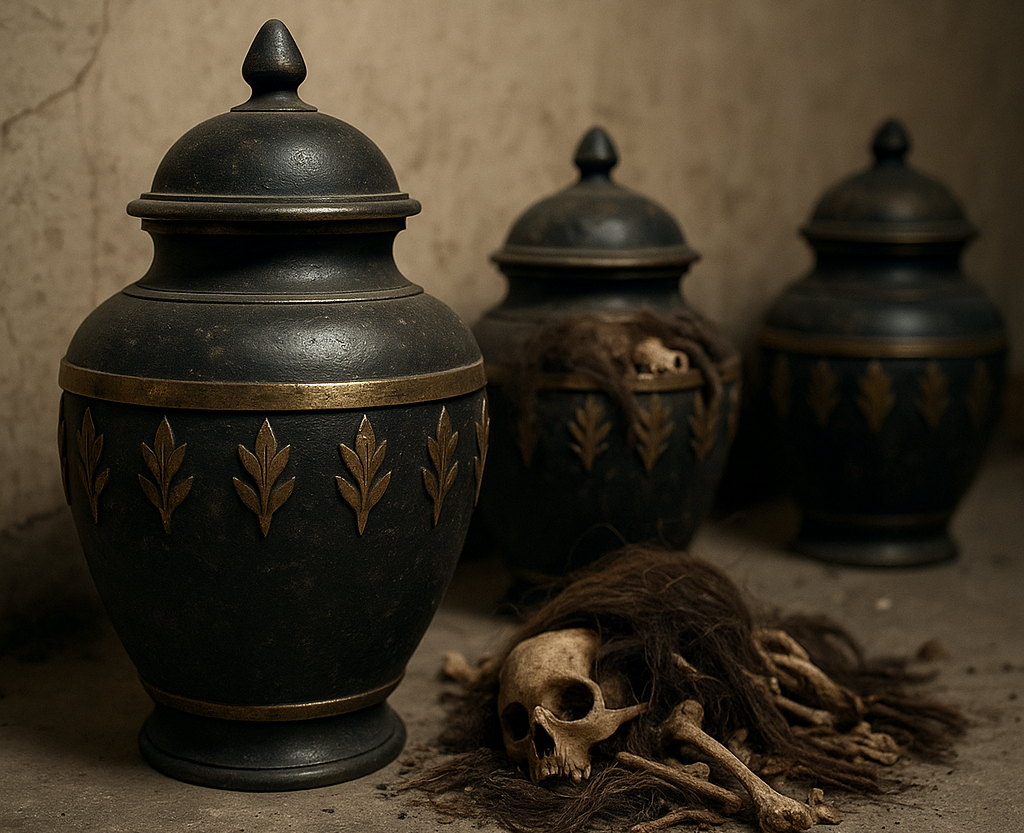
In an explosive disclosure, Parambir Singh — former Mumbai Police Commissioner and now Executive Director of the hospital — revealed that eight urns were found buried under the office space of the current trustees. And they didn’t just contain ashes.
“These urns, discovered under the tiled floors during a reconstruction effort, held bones, hair, rice, and various paraphernalia typically associated with **black magic,” Singh told reporters. “This wasn’t folklore. It was documented, witnessed, and videographed. What we unearthed was not just symbolic — it was meant to intimidate and spiritually curse the new leadership.”
These claims of occult practices aren’t baseless theatrics. When local police allegedly refused to register a case, the matter was taken to court, which ordered an inquiry under the Maharashtra Prevention and Eradication of Human Sacrifice and Other Inhuman, Evil and Aghori Practices and Black Magic Act, 2013 — a rare application of a progressive Indian law meant to deter superstition.
The Audit Trail: Where Did ₹1,200 Crore Go?
The current trustees didn’t stop at emotional or spiritual manipulation. They brought in external agencies — Chetan Dalal Investigation and Management Services and ADB & Associates — to conduct a forensic audit. Their findings were disturbing.
The audit reports claimed that over ₹1,500 crore had been misappropriated by former trustees, many of whom are said to reside abroad in Dubai and Belgium. These include unauthorized dealings with third-party distributors, using trust funds for personal luxury expenses, and gross mismanagement that directly affected hospital operations.
“Every rupee lost was meant for a patient, a doctor’s salary, or a machine to save a life,” said Mehta. “This betrayal is more than financial. It’s moral.”
The Cultural Symbolism of Urns
In Indian culture, urns are often associated with reverence, remembrance, and closure. They hold the cremated remains of loved ones, acting as sacred vessels in the grieving process. But to discover urns not in a place of mourning but as part of alleged black magic rituals is disturbing on multiple levels.
These were not ordinary vessels. Handcrafted, likely metallic with symbolic engravings, the urns were used not to honor, but to frighten and spiritually manipulate — a blasphemous turn in the traditional understanding of urns’ purpose.
This revelation also sends shockwaves into the funerary industry. As Dei Gratia Urns has long promoted, urns must uphold the dignity of the deceased. Any use of such sacred vessels in dark or malicious rituals is an affront to every family that has ever trusted one to house a loved one’s ashes.
Fallout and Future
The emotional cost to Lilavati’s brand has been significant. A hospital once known for excellence in cardiology, oncology, and critical care, is now under a cloud of black magic and corruption.
Public reactions have ranged from disbelief to fury. Social media is ablaze with hashtags like #LilavatiFraud, #UrnGate, and #BlackMagicHospital. Some medical professionals have resigned in protest, while others demand immediate government intervention.
Calls are rising for stricter oversight of non-profit medical trusts. The Enforcement Directorate is now involved, and arrests may soon follow.
As the courts delve deeper, one thing is clear: this isn’t just a financial crime story — it’s a cautionary tale about power, fear, and sacred trust broken in the most grotesque way.